


 By
By Martin Guptill has spent enough years in international cricket to understand how the game keeps reinventing itself. Once among the most feared white-ball openers in world cricket, the former New Zealand batter now finds himself in a different phase of his career: part commentator, part travelling T20 professional, still chasing the adrenaline rush of competition across unfamiliar territories.
Next month, Guptill will add another destination to that journey when he turns out for the Antwerp Anchors in the inaugural EUT20 Belgium league. For the 38-year-old, the attraction is not merely another franchise contract. It is also about watching cricket stretch beyond its traditional geography and reach new audiences in regions where the sport has long existed on the margins.
“I have never been to Belgium before, so it takes another country off the list that I can get to and play a bit of cricket in,” Guptill told Sportstar.
“So, I am looking forward to it in that regard and then obviously with the rise of T20 cricket and T10 cricket all over the world, having these leagues in different places where players that wouldn’t ordinarily get the opportunity to play with some people that have played international cricket for such a long time, it’s only going to make them stronger.”
For Guptill, these leagues are no longer merely entertainment products. They are developmental tools, and the rise of franchise cricket across Europe, particularly in emerging nations, could shape the next phase of the global game.
“Hopefully they can learn and help cricket in Belgium really take off,” he said. “I know there are a couple of leagues trying to start up in Europe as well, and the whole region can only benefit from these leagues to make cricket stronger in those regions.”
The timing, too, feels significant.
Cricket’s inclusion in the 2028 Los Angeles Olympics has altered conversations globally. Nations that once saw cricket as a niche immigrant sport are now beginning to invest with greater seriousness. Franchise tournaments in non-traditional regions are increasingly being viewed as stepping stones for local players and administrators looking to build competitive structures before cricket enters the Olympic spotlight.
Guptill believes the impact could be immense.
“I think it’s huge. I mean, it gives a bit of a pathway, I guess you can say, and a bit of a stepping stone to international cricket,” he said. “As you say, cricket is going to be in the Olympics in a couple of years’ time. So these countries that may enter a cricket team into them, it gives them the opportunity to be playing against better quality opposition, better quality players moving forward, and it’s only going to strengthen them and make them better players themselves.”
What genuinely excites him, though, is the thought of smaller cricketing nations sharing the Olympic stage with the game’s giants.
“Who knows, the likes of Belgium could be playing against India, Pakistan, New Zealand, Australia in the Olympics in a couple of years’ time and I mean how cool is that for these lesser known cricketing nations to be able to play against these bigger nations in a world event like the Olympics,” he said, with a smile, adding: “I mean if you ask me that’s pretty cool, that’d be awesome to be able to play in.”
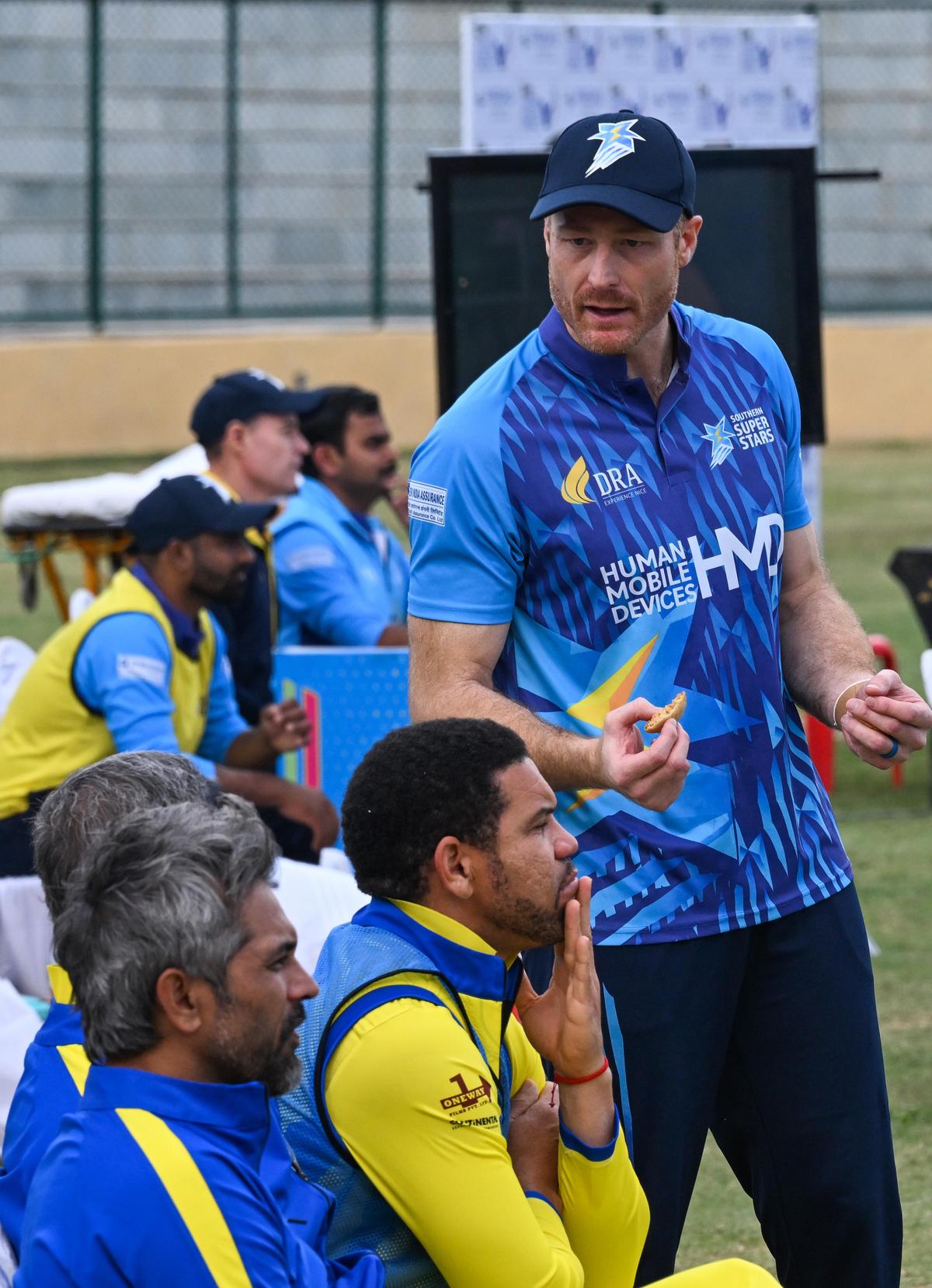
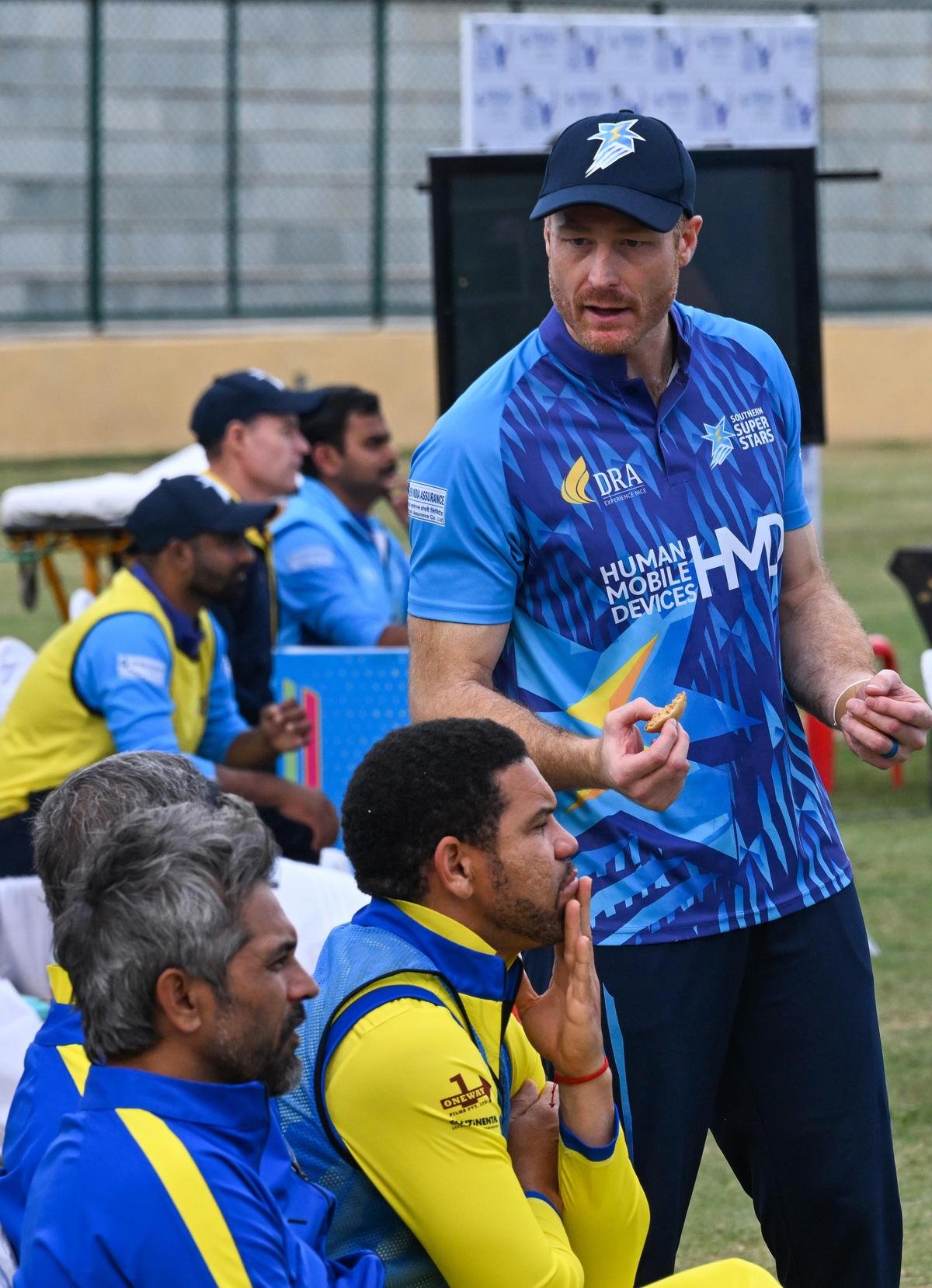
Southern Super Stars Martin Guptill during the Legends League Match at Bakshi Stadium in Srinagar. Guptill has been a globetrotting T20 star since his international retirement.
| Photo Credit:
IMRAN NISSAR

Southern Super Stars Martin Guptill during the Legends League Match at Bakshi Stadium in Srinagar. Guptill has been a globetrotting T20 star since his international retirement.
| Photo Credit:
IMRAN NISSAR
For someone who represented New Zealand across formats for more than a decade, Guptill understands the value of exposure. He also knows the importance of senior professionals in these fledgling ecosystems. At Antwerp Anchors, he will share the dressing room with globally recognised names like Andre Russell and David Wiese.
Guptill is clear about his own role.
“I know what my role in the team is. I’m ideally going to be batting in the top three, trying to get the team off to a really good start and then from there it’s everybody else is going to have their own roles inside the team as well,” he said.
The experienced players, he feels, can provide something more valuable than performances alone: perspective. In franchise cricket, where teams assemble rapidly, and players are often forced to adapt on the move, learning tends to happen in real time.
Adaptability becomes the defining currency.
“I think sometimes that’s the best place to learn, best place to actually do it is to be thrown in the deep end, and you know, you’re not going to get it right all the time, but that’s the best time to learn as well,” Guptill said. “You know, you learn from those failings, you learn from those harder times, and you come out a better cricketer on the other side.”
Guptill himself has become one of the globe-trotting veterans of the T20 ecosystem. Over the years, he has played with and against most of the sport’s major franchise stars.
“I’ve managed to be able to play with Andre Russell in different leagues around the world. I’ve played with David Wiese as well and played against him a lot at the same time,” he said. “So look, it’s exciting. I’m really excited to get there. I can’t wait.”
Even at this stage of his career, Guptill approaches preparation seriously.
“My preparation’s started already. I’m hitting balls. I’m trying to get the body right. I’m getting a little bit older now,” he said with a laugh. “So that you don’t want to get injured in these things. You don’t want to, you know, be the one who turns up, and you get an injury straight away.”
The demands of these short franchise tournaments can be unforgiving. In Belgium, the tournament will last barely over a week, with teams expected to play almost daily. There is little room for elaborate bonding sessions or tactical experimentation.
“I spoke to the coach last week. I think we’ve one, maybe two training sessions, maximum, before the tournament starts. And then we’re straight into it. We play pretty much every day,” Guptill explained.
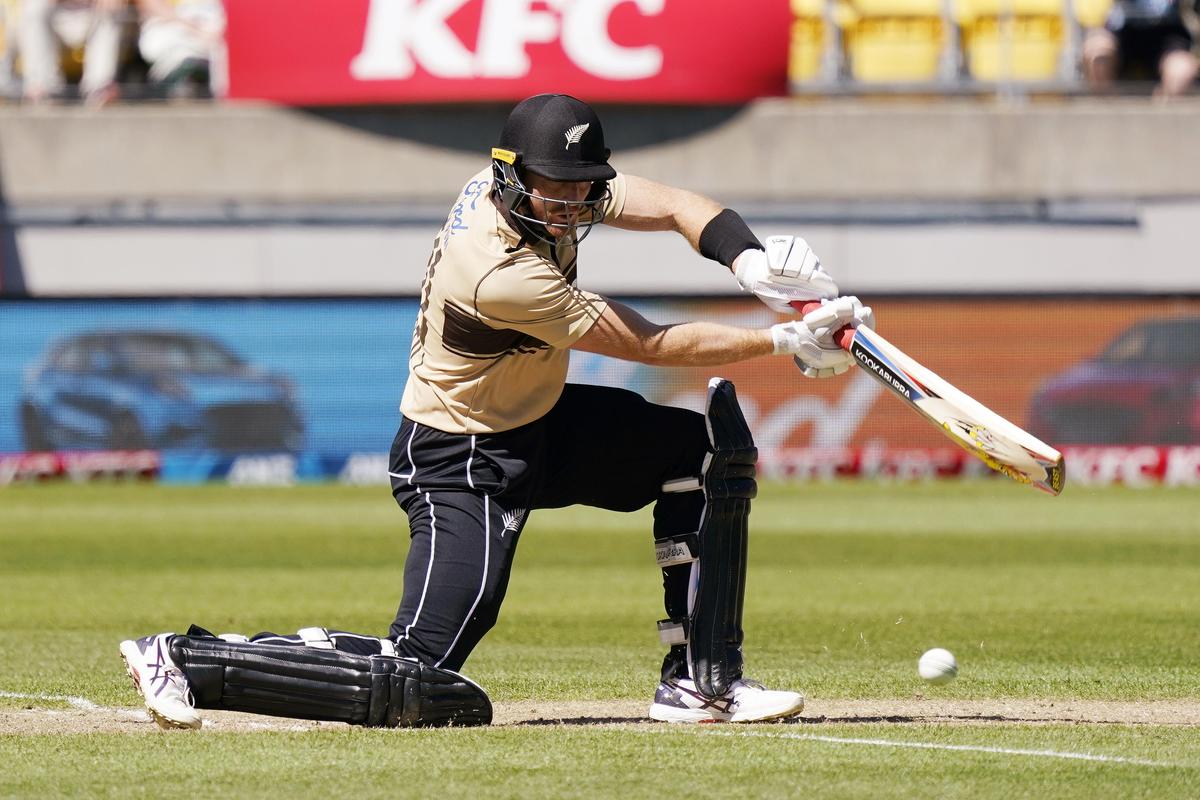
Martin Guptill leaves the international stage as a white-ball great for New Zealand, having racked up 7346 runs in 198 ODIs – only Ross Taylor (8607) and Stephen Fleming (8007) have scored more in the format for the Black Caps.
| Photo Credit:
AP
Martin Guptill leaves the international stage as a white-ball great for New Zealand, having racked up 7346 runs in 198 ODIs – only Ross Taylor (8607) and Stephen Fleming (8007) have scored more in the format for the Black Caps.
| Photo Credit:
AP
That intensity, however, mirrors the larger cricketing calendar. International players today shuttle between bilateral series, ICC tournaments and franchise leagues with barely any recovery time. Guptill, who experienced life as a three-format international cricketer during New Zealand’s rise as a white-ball powerhouse, understands the physical and mental toll.
“It’s not an easy thing when you start off. You know, you go from team to team to team, different teams all over the place, and you’re trying to get to know each other quite quickly,” he said. “It’s difficult, but you do get used to it. And it has become part and parcel of the game these days.”
Yet, even in this accelerated environment, Guptill insists that team culture cannot be ignored.
“I guess in such a short tournament, it’s about being yourself. You don’t want to go away from who you are, how you play your cricket and things like that,” he said. “So you want to be true to yourself, first and foremost, be your own person.
“You know, have a bit of fun with everybody in the dressing room, because as you say, it’s only an eight-day tournament and there’s not going to be a whole lot of time to sort of have those team bonding sessions or any sort of training or anything like that.”
That emphasis on simplicity and authenticity is quintessentially New Zealand cricket, a system long admired for building tight-knit environments despite limited resources. Guptill believes those fundamentals still matter, even inside the fast-moving franchise world.
“Hopefully, guys can, you know, be excited, have a bit of fun at training, get to know each other. And then from there, we can hit the ground running,” he said. “Prepare as well as we can and as a team, and create some new friendships and some relationships along the way and have a bit of fun out in the middle.”
The conversation naturally drifts toward the evolution of T20 batting itself, arguably the defining cricketing shift of the past decade. Guptill entered international cricket in an era where 150 was considered a competitive total. Today, 250-plus scores no longer shock anyone.
“It’s the way the game’s tracking,” he said. “The wickets are getting sort of flatter and less sideways movement and things like that as well, and less spins.”
As a batter, Guptill admits he enjoys the trend.
“I mean, I feel like I’m on the right side of it being a batter myself and, you know, looking to take full advantage of the power play,” he said.
But he also recognises how heavily the balance now tilts against bowlers.
“I think I’ve seen a couple of games in the IPL where Bhuvneshwar Kumar’s had the ball swinging and the scores haven’t been as big,” he observed. “So who knows? Can people play the swinging ball now? Are they training for that still? Who knows? But as soon as the ball’s got a little bit of movement, there just don’t seem to be as high-scoring games.”
For Guptill, adaptability remains the central skill in modern cricket. Aggression alone is not enough.
“You’ve got to have the skills to be able to adapt to different conditions because obviously when we get there, we’re not going to have any idea how the pitch is going to play, what it looks like or anything like that,” he said. “Obviously, we all want to have the 200 strike rate right from the get-go, but that’s not always feasible.”
For Guptill, adaptability extends beyond technique into mentality. He has experienced both extremes of professional cricket: the highs of World Cup centuries and the lows of lean patches under public scrutiny. He knows confidence can be fragile.
“Well, I think everybody’s mindset is different,” he reflected. “You know, you have to have a positive mindset. Otherwise, you’re just not going to succeed.”
Form slumps, according to him, are inevitable.
“You still have to try and back your skills because what got you there is still there,” he said. “You always want to be improving. You always want to have the mindset of learning as well.”
Guptill pointed to India opener Abhishek Sharma as an example of the modern high-risk T20 batter.
“I think we’ve seen Abhishek. He’s had a great success over the last few years, the way he’s batting. But you can also see when he’s under pressure, you know, those high scores are pretty, you know, there’s either all or nothing. There’s not much in between,” he said.
At the same time, he marvels at the fearless emergence of teenage talent in contemporary cricket. Asked about 15-year-old sensation Vaibhav Sooryavanshi, Guptill sounded genuinely astonished.
“As a 15-year-old, I couldn’t hit the ball like that,” he admitted. “And he’s come along and scored multiple T20 hundreds in the IPL on the biggest stage and really put his name out there.”
For Guptill, franchise cricket’s greatest strength lies in its ability to uncover talent rapidly.
“That’s what these franchise tournaments can do is they can identify new players for countries in the future,” he said. “And I mean, only being 15 years old. Wow. What a future he’s got ahead of him.”
Even while immersed in franchise commitments, Guptill continues to track New Zealand cricket closely. The Black Caps remain firmly in contention in the World Test Championship cycle, but Guptill knows sterner examinations await.
“New Zealand’s got some pretty tough matches coming up this year,” he said. “I know we’ve got four tests in Australia, which is never an easy feat. So, that’s going to be a massive step forward for New Zealand if we can, you know, get a couple of draws, even a couple of wins out of there.”
He also highlighted the importance of fast bowler Will O’Rourke returning fit.
“Hopefully with Will O’Rourke coming back from injury, he’s a massive spearhead in the bowling attack,” Guptill said. “And if he can stay injury-free, he’s going to certainly help New Zealand’s cause to go forward and push for some victories.”
For now, though, Belgium awaits.
A new league, a new dressing room, another unfamiliar cricketing outpost preparing to embrace the global T20 movement. Guptill knows exactly what he wants from the experience.
“Obviously, we want to win. You know, that’s the first and foremost thing we want to win,” he said. “I also want to have a lot of fun, meet some new people, experience what Belgium is like and, yeah, ultimately come away with a trophy and hopefully a couple of match-winning contributions.”
It is perhaps the perfect summary of where Guptill stands today: no longer chasing legacy, but still chasing moments that matter. In a career that has travelled from Auckland to Ahmedabad, from World Cups to franchise circuits, Belgium now becomes the latest stop in cricket’s ever-expanding map.
Published on May 12, 2026